Halal nutraceuticals and vaccines market: growth, formulation science and sourcing from India
How big the halal nutraceuticals and vaccines market really is, what makes a supplement or vaccine halal at the ingredient level, and how brands source halal-ready botanicals from India.
· 6 min read · YVELIA Editorial Team
Halal has grown far beyond a regional dietary label. In health products it rests on two principles together — halal (permissible under Islamic law) and tayyib (pure, wholesome, safe and ethically produced), known as halalan-tayyiban. For supplement and pharmaceutical buyers, that combination has become a benchmark for supply-chain transparency, clean-label formulation and traceable ingredients (Heliyon, 2023).
For brand owners, distributors and pharmacy chains in the GCC, Europe, Asia-Pacific, Africa and North America, halal-suitable nutraceuticals are no longer a niche. This guide looks at how large the halal nutraceuticals and vaccines market is, what makes a product halal at the ingredient level, what is driving demand — and how to source halal-ready botanical ingredients from India.
1. How big is the halal nutraceuticals and vaccines market?
Research firms define the market differently — some count only supplements and vaccines, others add functional foods or the whole halal pharmaceutical sector — so their figures differ. Read together, they point the same way: steady growth of roughly 5–8% a year to the mid-2030s.
Market Research Future (halal nutraceuticals and vaccines): about USD 51 billion in 2025, projected to reach about USD 108 billion by 2035 (7.8% a year). Dietary supplements were the largest segment, with herbal products among the fastest growing.
Coherent Market Insights (halal nutraceuticals and vaccines): about USD 80 billion in 2026, projected to reach about USD 133 billion by 2033 (7.5% a year).
Future Market Insights (nutraceuticals, functional foods and vaccines): about USD 77 billion in 2025, projected to reach about USD 145 billion by 2035 (5.2% a year), led by general well-being and digestive health, and by online and pharmacy channels.
Inkwood Research (halal nutraceuticals only): about USD 42 billion in 2024, projected to reach about USD 78 billion by 2032 (8.1% a year), with plant-based vitamins, botanical extracts and clean-label formats growing fastest.
Market Research Future (the wider halal pharmaceutical sector): about USD 195 billion in 2024, projected to reach about USD 478 billion by 2035.
Treat these as direction rather than precision — the scope behind each number matters more than the headline.
Where the growth is
Asia-Pacific is the fastest-growing region, anchored by Malaysia's and Indonesia's halal certification systems and by India's growing herbal exports.
Europe and North America grow through Muslim communities and through mainstream shoppers who read a halal mark as a sign of clean-label, traceable sourcing.
The GCC and South Africa combine high spending on health with a widespread expectation of halal, making them strong destinations for finished supplements and standardised botanical ingredients. See our GCC market guide.
2. What makes a nutraceutical halal?
Halal compliance is decided by every input — not only the active ingredient, but the capsule, the excipients, the processing aids and the extraction solvent (Heliyon, 2023). The usual problem areas are:
Capsule shells and gelling agents. Conventional hard and soft capsules use gelatin made from pig skin (not halal) or cattle bones and hides (halal only with verified slaughter). Plant-based alternatives are HPMC (hydroxypropyl methylcellulose) capsules and hydrocolloids such as pectin, agar, carrageenan and alginates. HPMC lets in more oxygen than gelatin, so oxygen-sensitive actives may need antioxidant protection or a different format.
Lubricants, coatings and emulsifiers. Magnesium stearate, stearic acid, glycerin and polysorbates can come from animal fats. Halal formulations specify plant-derived grades and plant-based coatings.
Extraction solvents and residual ethanol. Water extraction, supercritical CO2 extraction or food-grade solvents removed to a defined residue are preferred. Halal standards in the GCC and South-East Asia set limits for residual ethanol in finished products — agree the limit with your certifier before you specify the extract.
Collagen and proteins. Instead of porcine or unverified bovine collagen, halal beauty-from-within formulas use plant-based nutrients that support collagen formation — for example vitamin C from amla or acerola — alongside pea, rice or soy proteins.
3. Why vaccines are part of the same market
Market reports group vaccines with nutraceuticals because both face the same question: are the production inputs halal? Some conventional vaccines have used porcine gelatin as a stabiliser and porcine trypsin in cell culture, which has driven hesitancy in some communities (Journal of Islamic Marketing). Manufacturers are replacing these with recombinant enzymes, plant-based culture media and synthetic stabilisers.
YVELIA does not supply vaccines or pharmaceutical ingredients. Our part of the halal health market is botanical ingredients and food supplements — the preventive-wellness side that buyers increasingly source alongside halal medicines.
4. How halal integrity is verified
Paper declarations are increasingly backed by laboratory tests:
FTIR spectroscopy can distinguish porcine from non-porcine gelatin capsule shells quickly and at low cost (PubMed Central, 2025).
Real-time PCR detects traces of porcine DNA, and LC-MS/MS identifies species-specific collagen markers, at very low concentrations.
For buyers, the practical step is to ask which tests stand behind a halal claim, and for which batch.
5. Five drivers of demand
A large, young consumer base. Around two billion Muslims worldwide, with a growing share of ingredient-literate younger buyers who expect both effectiveness and faith-aligned ingredients.
Overlap with clean label and vegan. Plant-based halal formulations also suit vegetarian, vegan and animal-free shoppers in Europe, the UK, North America and Australia.
Tighter regulation. Malaysia's MS 2424 sets guidelines for halal pharmaceuticals, GCC food standards include GSO 2055-1, and Indonesia is phasing in mandatory halal certification for health supplements and medicines (Journal of Medical Law and Public Health).
Preventive, easy formats. Gummies, granules, effervescent powders and single-serve stick packs are replacing large tablets — see our article on trends shaping nutraceuticals.
Traceability at the point of sale. Online retail is the largest channel and pharmacies the fastest-growing, and both expect batch certificates of analysis and verifiable halal marks.
6. Sourcing halal-ready botanicals from India
YVELIA Global Impex supplies botanical ingredients and private-label wellness products from Ahmedabad, Gujarat, to brand owners, importers, pharmacy chains and formulators in the GCC, the UK, Australia, South Africa and beyond. For halal-focused ranges we work in four ways:
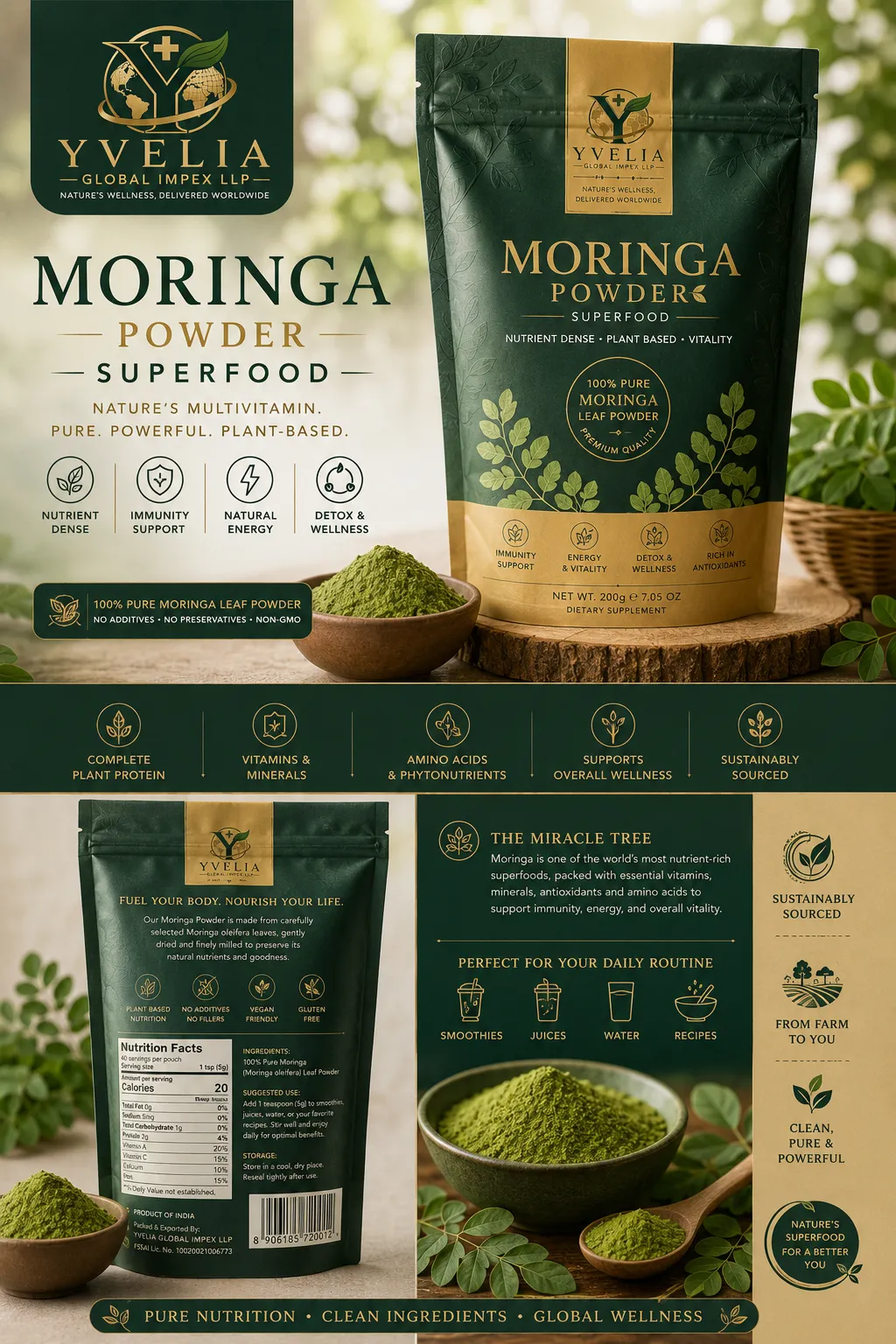
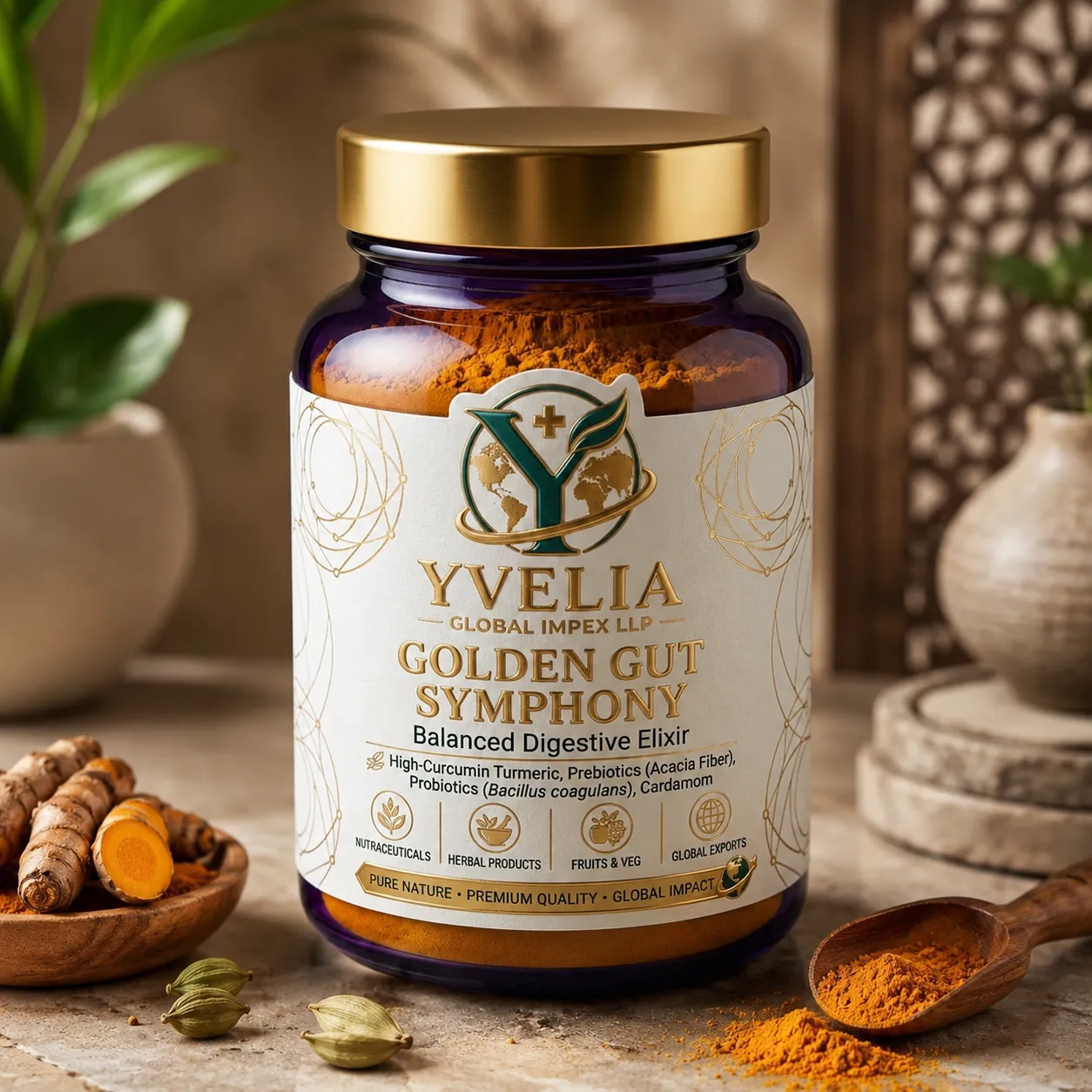
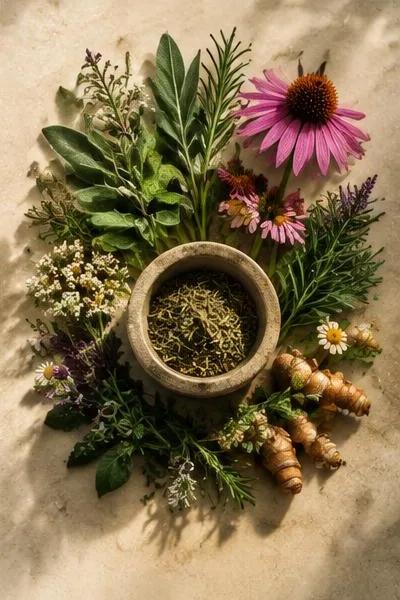
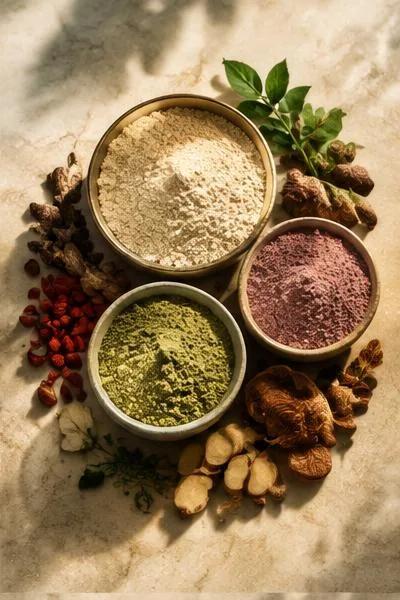
Botanical ingredients. Standardised extracts such as turmeric extract 95% curcuminoids and ashwagandha root extract, and superfood powders such as moringa leaf powder and amla — plant-derived ingredients for halal-suitable formulas.
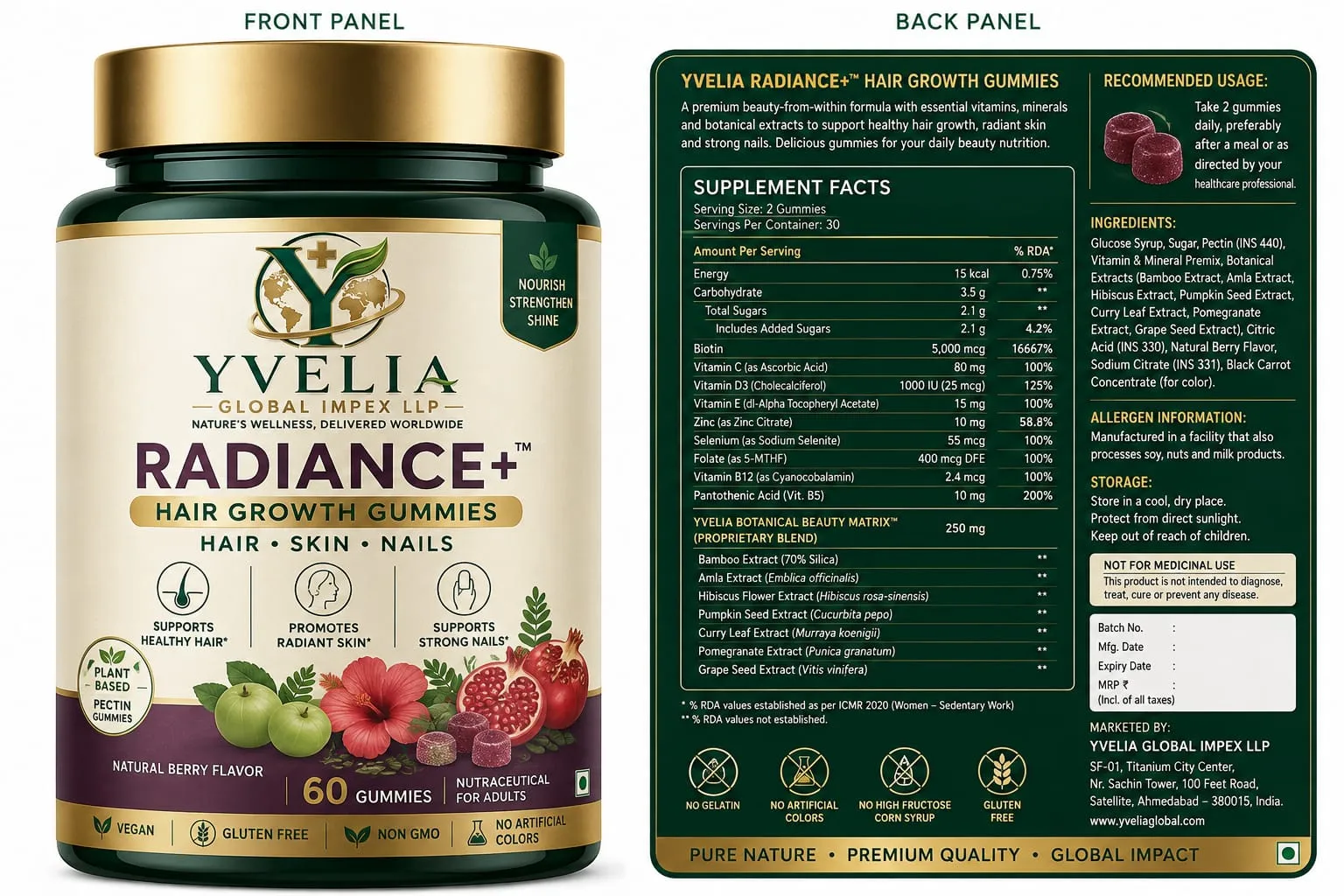
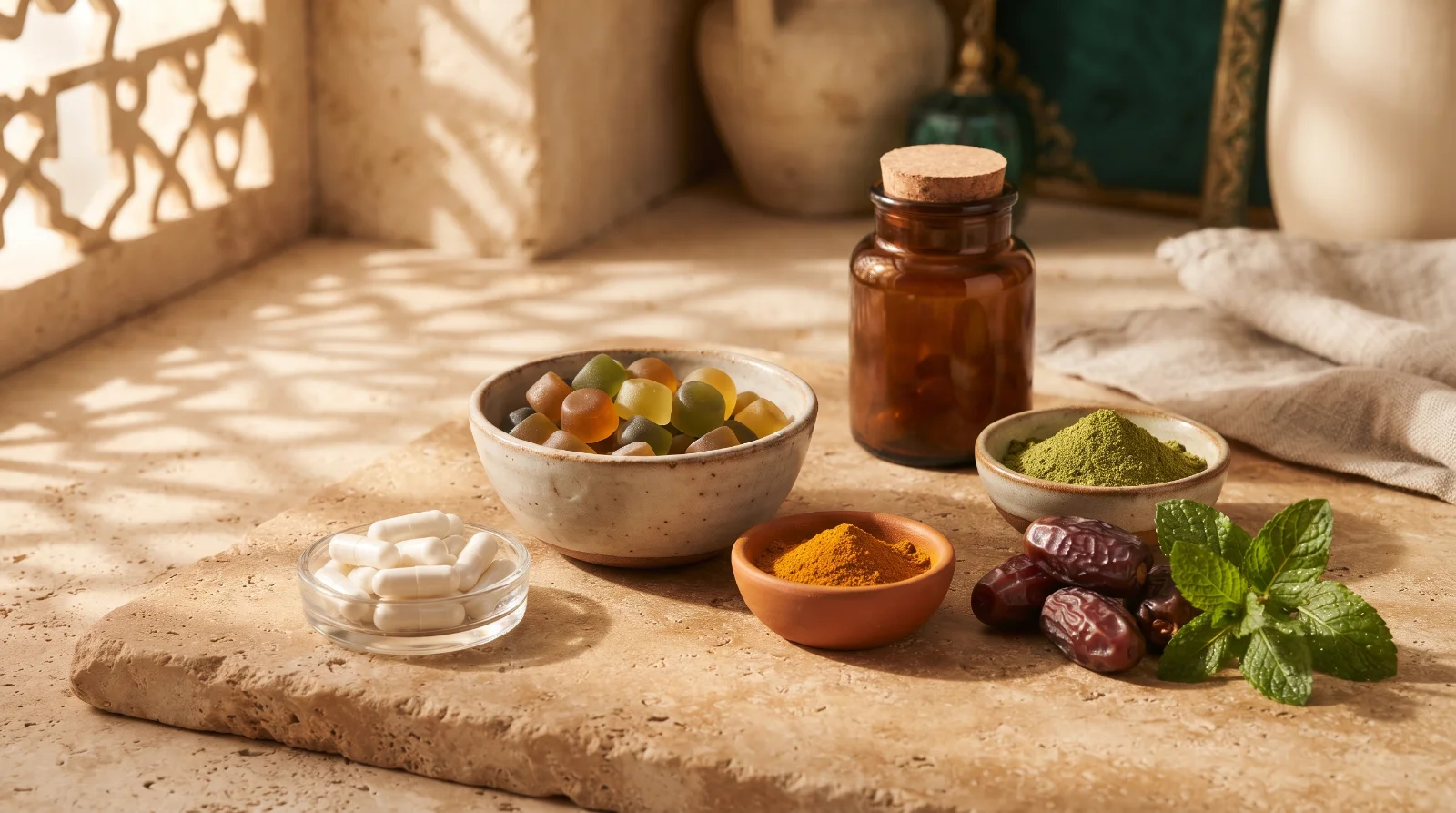
Plant-based formats. Capsules can be specified with HPMC shells, gummies with a pectin base, and many products are supplied as herbal granules, powders or stick packs, which need no capsule at all.
Documentation for each destination. Specifications, batch COAs (assay, heavy metals, pesticide residues, microbiology), technical data sheets, allergen and GMO statements, and bilingual Arabic–English label drafts for the GCC. Halal certification from a body recognised in your market is confirmed per product on enquiry.
Short routes to the Gulf. Sea freight from Mundra and Nhava Sheva to Jebel Ali, Dammam and Jeddah — see our UAE and Bahrain guides.
Projects can start from bulk ingredients, private label on an existing YVELIA+ formula, OEM/ODM, or a custom formulation, with samples typically ready in 4–6 weeks. The Solutions page explains each route.
Key takeaways for buyers
The market is large and growing — estimates range from about USD 50 billion to USD 80 billion today, growing 5–8% a year — but check what each report includes.
Excipients decide compliance. Capsule shells, stearates, coatings and solvents are where halal status is won or lost.
Vaccines and supplements are separate supply chains that share one market label and one question: are the inputs halal?
Documentation clears the import gate. With Malaysia, Indonesia and the GCC tightening rules, ask for batch-level COAs and a halal certificate from a body your market recognises.
References
Market Research Future (2026). Halal Nutraceuticals and Vaccine Market Research Report, 2025–2035.
Coherent Market Insights (2026). Halal Nutraceuticals and Vaccines Market Size and Forecast, 2026–2033.
Future Market Insights (2025). Halal Nutraceuticals and Vaccines Market Outlook, 2025–2035.
Inkwood Research (2025). Global Halal Nutraceuticals Market Forecast, 2025–2032.
Market Research Future (2026). Halal Pharmaceuticals Market to 2035.
Herdiana Y. et al. (2023). Towards halal pharmaceutical: exploring alternatives to animal-based ingredients. Heliyon.
PubMed Central (2025). Detection of capsule origin using FTIR-ATR and discriminant analysis.
Journal of Islamic Marketing. Halal vaccination purchase intention: a comparative analysis.
Journal of Medical Law and Public Health (2026). Halal labelling in over-the-counter medications across Saudi Arabia, UAE, Malaysia and Indonesia.
Planning a halal-suitable range? Send us your brief — target market, format and products — and we will reply with the specification, documentation and next steps within 24 business hours.
Frequently asked questions
What does halalan-tayyiban mean for supplements?
Halal means permissible under Islamic law; tayyib means pure, wholesome and safe. For a supplement, both apply to every input — active ingredients, capsule shell, excipients, processing aids and solvents.
How big is the halal nutraceuticals and vaccines market?
Estimates range from about USD 50 billion to USD 80 billion in 2025–2026, growing roughly 5–8% a year to the mid-2030s. Figures differ because each research firm defines the market differently.
What makes a capsule halal?
The shell material. Gelatin capsules can be porcine (not halal) or bovine (halal only with verified slaughter). HPMC vegetable capsules avoid the issue entirely.
Are YVELIA products halal certified?
Our botanical ingredients are plant-derived and formulations can be specified halal-ready, for example with HPMC capsules or pectin gummy bases. Halal certification from a body recognised in your market is confirmed per product on enquiry.
About the author
YVELIA Editorial Team
Sourcing, quality & export documentation
The sourcing, quality and export-documentation team at YVELIA Global Impex LLP in Ahmedabad, India. These guides answer the questions buyers in the GCC, UK, Australia and South Africa ask us most — specifications, documents and market rules. Regulatory notes are orientation, not legal advice, and are reviewed at least once a year.
More about YVELIA