How to source moringa powder for supplement manufacturing
A buyer's framework for origin, drying method, specification and the documents to request before you approve a moringa supplier.
· Updated · 2 min read · YVELIA Export Team
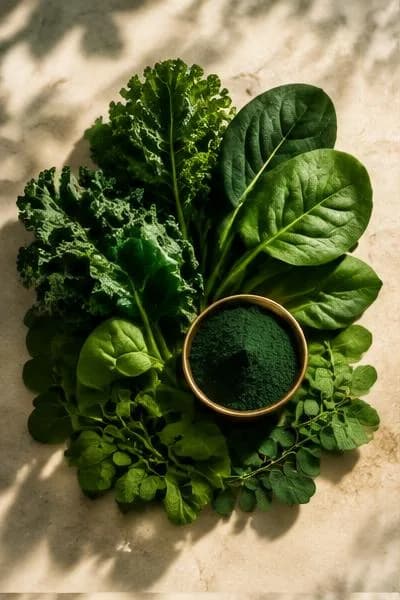
Moringa oleifera has moved from niche superfood to mainstream greens ingredient, and India grows most of the world's supply. That scale is an advantage — and a risk. Quality varies widely between lots, and the difference between a vivid, fresh-smelling powder and a dull, hay-like one is decided long before the product reaches your warehouse. This guide sets out what professional buyers check.
1. Start with the application
The right specification depends on what you are making. A capsule filler needs consistent bulk density and good flow; a smoothie powder needs fine mesh and a clean taste; a bakery colourant needs stable green colour after heat. Write the application down before you request quotes — it determines mesh size, microbiological limits and whether you need a steam-treated grade.
2. Origin and harvest
Moringa grows well in dry, warm regions, and Gujarat, Tamil Nadu and Andhra Pradesh are major sources. Ask where the leaves were grown, when they were harvested and how long they spent between cutting and drying. Young leaves from well-managed plantations give higher protein and a brighter colour than mature leaves or leaves mixed with stems.
Leaf-only versus leaf-and-stem
Stem inclusion lowers cost but also lowers protein and makes the powder coarser and more fibrous. Specify leaf-only if you are positioning on nutrient density, and ask for a maximum stem content if the supplier uses mechanical separation.
3. Drying method matters most
Sun-drying is cheap but exposes leaves to dust, UV and microbial growth, and it degrades chlorophyll. Shade-drying and low-temperature mechanical drying protect colour and aroma. A good lot should be a vivid green, smell fresh and grassy, and have moisture comfortably below the specification limit.
4. The specification to agree
Identity: botanical name, plant part (leaf) and a statement of no adulteration
Appearance, colour, odour and taste
Mesh size (commonly 60–100 mesh) and bulk density
Moisture and total ash / acid-insoluble ash
Protein (typically 20–27% for leaf powder)
Microbiology: total plate count, yeast and mould, E. coli, Salmonella
Heavy metals: lead, cadmium, arsenic and mercury
Pesticide residues against the destination market's maximum residue levels
Testing tip
Ask for the laboratory name and accreditation on every certificate of analysis, and commission an independent test on the first commercial lot. Consistency between the supplier's COA and your own result is the best early signal of a reliable partner.
5. Documents to request
Before approval, request a technical data sheet, a recent COA, allergen and GMO statements, a pesticide-residue report and — for organic programmes — the organic certificate with its scope. Our botanical export documentation checklist lists everything you will need at shipment.
6. From single ingredient to finished product
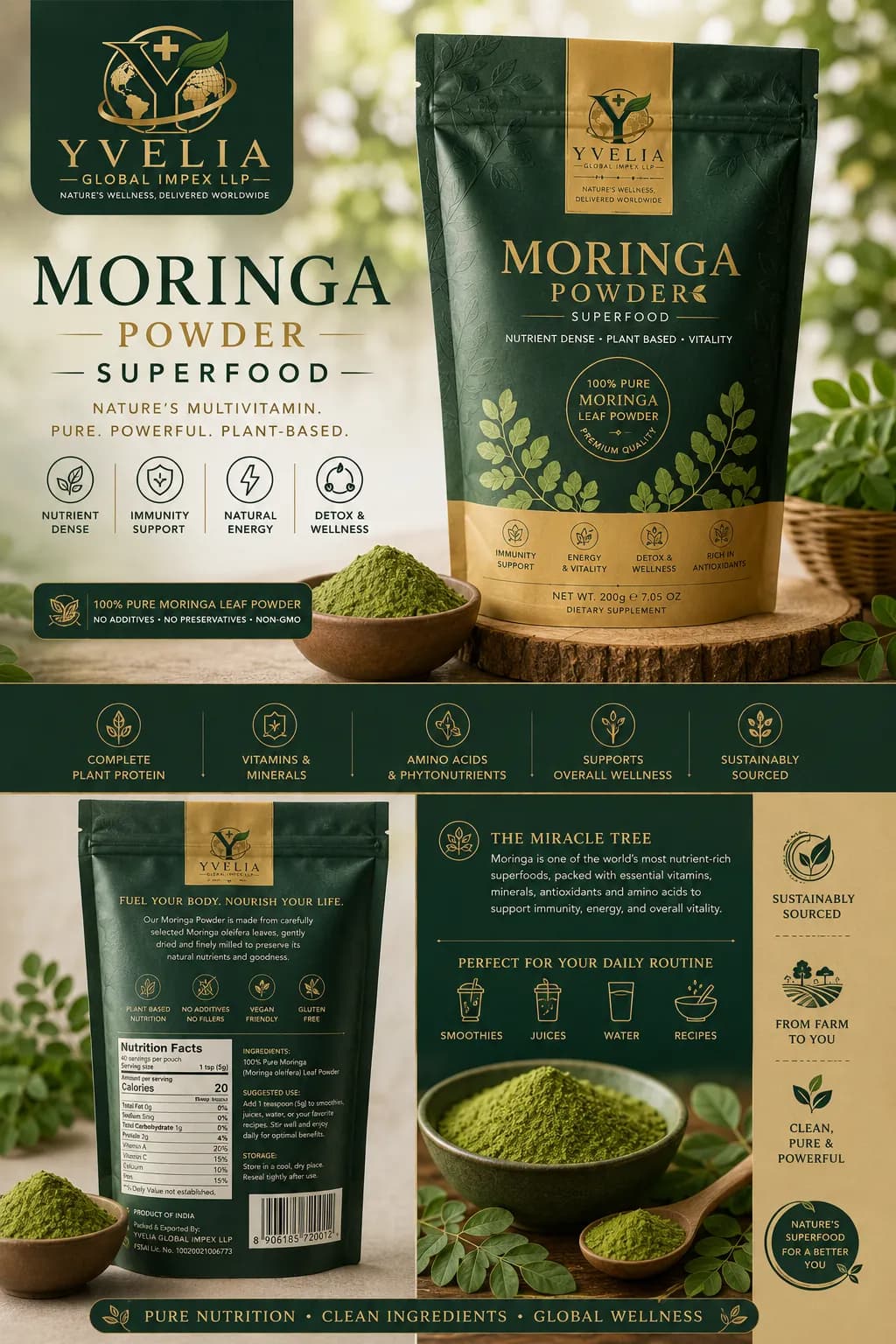
Many brands start with a single-ingredient moringa powder and extend into greens blends and drink mixes. YVELIA supplies moringa leaf powder in bulk and private label, a ready-made mixed greens base and the YVELIA+ GREEN+ signature blend — a fast route from ingredient to finished product.
Frequently asked questions
What protein level should moringa leaf powder have?
Leaf-only moringa powder typically contains 20–27% protein. Lower values can indicate stem inclusion or mature leaves.
Is sun-dried moringa acceptable?
It is cheaper, but shade-dried or low-temperature dried moringa usually has better colour, aroma and microbiological quality, which matters for supplements and beverages.